The Guaranteed
Rent Specialists

1-5
YEARS

Year: 2016

  • Local Authority reclaiming Housing Benefit and Council Tax for 4 months?

    Local Authority reclaiming Housing Benefit and Council Tax for 4 months?

    I own a flat in Tyne and Wear with a DSS tenant, assured shorthold tenancy, no deposit (stupid I know).

    I recently received a letter from H Benefit saying my tenant has just left and therefore Housing Benefit has stopped-fair enough.

    I have just received another letter stating that the tenant left in October and I have to repay nearly 4 months housing benefit!!

    I also have the Council after me for 4 months Council Tax. My question is:
    1.Why can Housing benefit not reclaim the rent from the tenant-they could do this by reducing the benefit on the flat that he’s moved to.
    2.Why can the Council not pursue the tenant for Council Tax, I had no way of knowing that the flat was vacant and it strikes me as totally unfair that I am being asked for this money when the tenant was still legally my existing tenant-no notice given, etc etc.

    Any advice your readers can give would be most welcome, I am sure this situation is fairly common!

    Douglas

    Blog Post from Property 118

    Many landlords within the private rented sector are increasingly abandoning direct lettings to tenants receiving Housing Benefit, opting instead in favour of our long established, popular and successful ‘Guaranteed Rent’ letting model.

    This article provides a clear and useful illustration of the financial risks facing landlords who let their properties directly to tenants receiving Housing Benefit/Local Housing Allowance & Universal Credit.

    Landlords should seriously consider exploring the option to ‘Let to the Council’ on a reputable and well-established ‘Guaranteed Rent’ scheme, such as ours, where the risk of incurring any rent arrears or rent loss is entirely removed, in contrast to directly letting their properties to tenants in receipt of Housing Benefit/Local Housing Allowance or Universal Credit.

    To fully understand how our ‘Guaranteed Rent’ scheme can remove all these financial risks for Landlords with properties in north, east & west London, please call us on 020 8447 1222 or visit our website https://centralhousinggroup.com/ for further information.

    See details of our Guaranteed Rent Scheme here


  • One in six tenants sublets their home

    One in six tenants sublets their home

    Do you know who’s living in your property? Maybe not, according to new research.

    Direct Line for Business found that one in six (17%) tenants in the UK admits to having rented out part or all of their property to someone who isn’t on the lease agreement.

    A quarter (25%) of tenants who sublet their property didn’t check the terms of their lease to see if it was permitted, while over a third (34%) had not informed their landlord of the decision.

    Of the subletters who did not inform their landlord, a fifth (23%) got found out in the end anyway. The consequences when landlords catch tenants subletting can be severe. In 11% of cases the tenants named on the lease were evicted with 6% losing their deposit in the process. Other repercussions include landlords increasing rental charges (22%), issuing a fine (14%) or issuing a formal warning (8%).

    In spite of this, Direct Line for Business’s research reveals that 2016 could see an increase in the number of people subletting their properties. One in six renters (15%) claim they are thinking about subletting part or all of their rented property by advertising on property letting websites such as Airbnb.

    Nick Breton, head of Direct Line for Business said: “The average monthly rent across the UK currently stands at £7392. This means on average, approximately a third of people’s income goes towards accommodation. With the market having seen a 5% increase in average rents in the last year, it seems that a larger number of renters are tempted to offset this expense by subletting their properties.”

    Over the last two years, Landlord Action has seen an 18% increase in the number of instructions from landlords with subletting cases.

    Paul Shamplina, founder of Landlord Action, said: “Subletting is fast becoming one of the leading grounds for eviction, alongside rent arrears and Section 21 for possession only. This has been fuelled by sky high rents preventing some tenants from being able to afford even single-unit accommodation, forcing many to resort to bedsits or shared accommodation.

    “Organised subletting scams are also becoming more prevalent, where tenants, or sometimes even fake tenants, advertise properties and rooms on holiday/accommodation websites in order to cream a profit without the landlords’ consent.”

    When looking at who the properties are sublet to, friends or recommendations (both 28%) are the two most common types of sublets. Family members account for just over a fifth (21%), while 19% of renters have sublet to strangers responding to an advert.

    Subletting is most common in the North West and West Midlands, where more than a quarter (27%) of private tenants say that have sublet their properties. London (23%) is third, while renters in the South East (9%) and Northern Ireland (7%) are least likely to sublet their properties.

    “There could be some serious consequences for tenants who sublet, but landlords need to be aware that in these circumstances there could also be insurance implications,” said Breton, “Subletting is not covered under most insurance policies, so it’s really important that landlords make their tenants fully aware of the restrictions on the lease and maintain that communication that can help prevent any future breaches”.

    Blog Post from Landlord Today

    Central Housing Group’s ‘Guaranteed Rent’ Scheme provides professional assistance to landlords in addressing the various types of tenant-related issues highlighted in this article.

    Our friendly, professional and comprehensive management service includes regular property inspections (including the regular use of digital photography for monitoring purposes) that are carried out either on a fortnightly or b-monthly basis, depending on the Council letting scheme that the property is occupied under.

    Inspections are a vital part of the service we provide to landlords, as they allow us to closely monitor the condition of our properties as well as noting any occupancy issues and also allow us early intervention if necessary.

    If you let your property privately, most agents will carry out inspections only once or twice a year or, at best, on a quarterly basis and these inspections may sometimes incur an additional charge for landlords.

    By carrying out regular and frequent inspections we ensure that the opportunity for unauthorised subletting or unauthorised occupancy, by tenants, is minimised and significantly reduced but, failing this, unauthorised subletting or unauthorised occupancy can be identified at an early stage and reported to the Council concerned for immediate remedial action.

    Our ‘Guaranteed Rent’ Scheme and management service also provides landlords with the peace of mind that they do not have to deal directly with tenants when they break the rules and can instead rely on our experienced and professional team of staff to effectively deal with all tenant management issues.

    See details of our Guaranteed Rent Scheme here

  • ‘Generation Rent’ dominates London property market for the first time

    ‘Generation Rent’ dominates London property market for the first time

    By Katie Morley

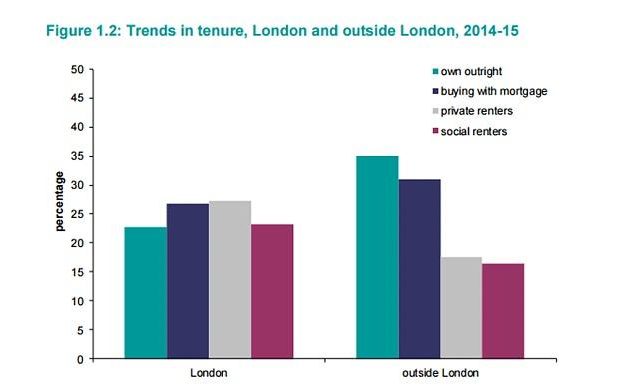
    Trend if tenure
    The number of private renters in the capital has surpassed mortgaged buyers for the first time


    Private renters in London outnumber homeowners for the first time in a more than a decade, official figures show, amid concerns a generation of young families are being permanently priced out of the housing market.

    New data from the Government’s English Housing Survey, shows some 898,000 households in the capital are living in privately rented accommodation, more than double the 405,000 households who privately rented homes in 2003/04. By comparison 883,000 households live in mortgaged homes, down 17pc from 1m ten years ago.

    Landlords are duping the young into cramped housing – it has to stop

    Experts said the combination of lower salaries and soaring house prices meant young families are stuck renting because they are unable to afford a mortgage. Yesterday official figures showed London house prices rose by more than 9pc over the past year, with the average home valued at £536,000.

    The trend means London will transform from a city of homeowners to a city of renters within a generation, according to a PwC report published on Tuesday.

    “The pressure is on to deliver a greater supply of affordable housing” – David Hollingworth

    Ashley Seager, co-founder at the Inter-generational Foundation, a think tank, said: “That the number of under-34s renting has doubled in just ten years, while half of all home-owners are under-occupying, highlights just how intergenerationally unfair our housing market has become.

    “Unless the Chancellor takes more action to cool buy-to-let investment further and property-hoarding by older generations, young people will increasingly be left out in the cold.”

    David Hollingworth, a spokesman at London and Country, a mortgage broker, said: “The slide in home ownership and corresponding increase in private renters illustrates the difficulties facing aspiring first time buyers. Just as worrying is that the proportion of private renters that expect to buy had dropped year on year. If that trend continues it would suggest a gloomy picture where growing numbers begin to give up on home ownership.

    “The pressure is on to deliver a greater supply of affordable housing. The Government has clearly put its flag in the home ownership camp and will need to see improvements quickly. The measures aimed at Buy to Let landlords, in a bid to level the playing field for first time buyers, could result in rents increasing longer term. If that isn’t matched by an increase in ownership options then it could ultimately only add to the difficulty in amassing a deposit.”

    A Department for Communities and Local Government spokesman said: “We are determined to create a bigger, better private rented sector and are attracting billions of pounds of investment to build homes specifically for private rent, which will increase choice for tenants. We have also introduced measures to ensure tenants can be confident they will get a fair deal.

    “Furthermore with 86% of the public saying they want to own their own home, we want to ensure anyone has the opportunity to do so. That’s why we’ve doubled the housing budget to support the boldest plan for housing by any government since the 1970s, with Government initiatives having already helped nearly 270,000 people to buy since 2010.”

    Blog Post from The Telegraph

    See details of our Guaranteed Rent Scheme here
    See details of Rent to the Council here

  • HMRC must clarify new wear and tear allowance, say tax experts

    Agents acting for landlords replacing furniture and other domestic items in homes to let should be given detailed guidance from the HMRC to avoid future problems.

    That is the view of the Association of Taxation Technicians, given in its formal submission to the Treasury on proposals to change wear and tear tax relief for landlords.

    The new rules, which will apply from this coming April, permit a tax deduction for the cost of replacement furniture, for example, but the ATT says the draft currently contains many terms which could create confusion.

    “In general, we welcome the new rules which are more logical than those they replace but if they are to work efficiently they need to be much clearer” says Michael Steed, president of the ATT.

    In particular the ATT asks:

    – will kitchen equipment qualify if it is provided for the general use of, say, three tenants who will live in a property despite the legislation stating “solely for the use of the lessee”?

    – do the rules apply at all where the tenants do not have a formal lease?

    – will replacement garden furniture qualify given that it is not provided for use “in the dwelling-house”?

    – can a futon be a replacement for a bed, or a tumble-drier for a freezer or a bookcase for an old piano?

    – if a new item is a real improvement on the old item (because it has much greater functionality) but is purchased second-hand, is the allowable expenditure limited to what would have been the brand new cost of a like-for-like replacement or is it restricted to the hypothetical second-hand cost of a straight replacement? And if the latter, what evidence does the landlord need to keep?

    Blog Post from Letting Agent Today

    See details of our Guaranteed Rent Scheme here

  • Tenant’s cannabis farm costs landlord ten thousand pounds

    Tenant’s cannabis farm costs landlord ten thousand pounds

    A Wigan landlord is counting the true cost of a tenant’s cannabis farm, in one of his properties, and he says it will cost him at least ten thousand pounds to repair the damage.

    When interviewed by the local paper, the landlord asked not to be identified as he feared reprisals and stated that he had no idea whatsoever that the plants were being cultivated in his property.

    He said he had known the tenant for four years and had always carried out regular inspections of the property, the last one was held in October of last year.

    He said: “I have never had a problem with the tenant, who had been living there for about four years, before.

    “I’d say by the amount of gear in there the plants they grew would have been worth around £100,000.

    “The police attended on January 12 but they didn’t contact me until last week. It was a real shock to get a call like that out of the blue.”

    The owner warned other landlords about the extent of damage that the gangs who farm cannabis can cause.

    He said: “They have completely trashed it. The damage is unbelievable.

    “It is going to need a new kitchen, bathrooms, the holes in the roof will need fixing and it will need completely redecorating. It could cost up to £10,000 for me to get sorted.

    “It is all insured and I have had the loss adjusters in but that is all I can do at the moment.

    “There was nothing to suggest this was happening. The rent was coming in on time as always. But apparently the neighbours started to notice the smell and called the police.”

    Following the apprehension of a 34 year old man, police confirmed that they uncovered a cannabis farm within the property. Eighty young plants were found in the house however the 34 year old was just given a caution.

    Blog Post from Property Information Made Simple

    Central Housing Group’s ‘Guaranteed Rent’ Scheme provides professional assistance to landlords in addressing the various types of tenant-related issues highlighted in this article. Our friendly, professional and comprehensive management service offers regular bi-monthly property inspections (including the regular use of digital photography for monitoring purposes) and, in accordance with the terms of our contract, (in the absence of holding tenant deposits), also provides landlords with our assurance that we will rectify any and all wilful tenant damage.

    Our ‘Guaranteed Rent’ Scheme and management service also provides landlords with the peace of mind that they do not have to deal directly with tenants when they break the rules and can instead rely on our experienced and professional team of staff to effectively deal with all tenant management issues.

    See details of our Guaranteed Rent Scheme here

  • Generation Rent: London to become a city of renters by 2025

    Generation Rent: London to become a city of renters by 2025

    New research has revealed that 60pc of Londoners will be renting in nine years’ time

    London will become a city of renters, with just 40pc owning their own home in 2025, according to new research from PwC.

    This is a reversal of the situation in 2000, when 60pc of Londoners owned a house, either outright or with a mortgage.

    PwC’s forecast of the continuation of ‘generation rent’ will come as bad news to many, including the government, which has been attempting to create a nation of homeowners by artificially boosting the market with schemes such as Help to Buy. George Osborne, the Chancellor, is also penalising landlords by raising stamp duty on buy-to-let properties from April.

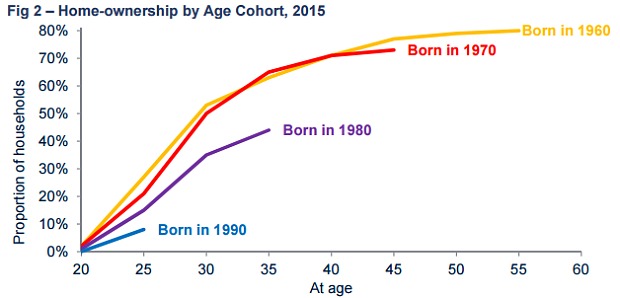
    Locked out by high prices and unattainable deposits and mortgages, young people will be the hardest hit: just 26pc of those currently aged 20-39 will own their own home by 2025.

    This compares with 64pc of households born in 1960 and 1970 who owned a house by the time they were 35.

    home_ownership_3575198b


    The rental rate will be highest in London, with a forecast 24.4pc rise in the number of people privately renting in the capital between 2000 and 2025, while in the UK as a whole it will rise by 14.5pc.

    Due to low interest rates, those with mortgages are seeing falls in their housing costs, compared to renters, and especially in London. The Resolution Foundation said in a new report “that measured before housing costs, median incomes in London appear to have grown by 2.9pc post-crisis; measured after housing costs, they remain 3.7pc below pre-crisis levels.”

    Renting is predicted to increase in every region of the UK; Northern Ireland will see the next biggest growth of renters, at 24.4pc, driven by low levels of house building and a younger population. The slowest growth will be in the South West, at 6.1pc.

    Homeowning in Britain peaked in 2003 at 71pc, and has been declining ever since, according to Neal Hudson at Savills. The height of home ownership was boosted by Right to Buy policies of the 1980s.

    Richard Snook, a senior economist at PwC, said: “This analysis shows that people are increasingly being locked out of owning a home in London, demonstrated by the sharp rise in private rental levels and sharp fall in home ownership.

    “High prices are making homes in the capital unaffordable to most and could undo a century-long trend towards rising home ownership rates. In just 25 years the city has been transformed to one where rental is becoming the norm – especially for younger people.

    Research from the Association of Residential Lettings Agents found that first-time buyers who buy a house this year will have spent on average £52,900 on rent.

    But it isn’t all bad news: rents are rising at a much lower rate than house prices, and largely mirror wage growth. Homelet’s most recent rental index revealed that rents in Greater London are rising at the slowest rate in almost two years. Average rent in the UK, excluding Greater London, is £740 a month, with rents in London averaging £1,510 a month.

    David Snell, a partner at PwC, added: “With around 60pc of Londoners predicted to be renting by 2025 (40pc private sector and 20pc social housing), policy will need to adapt. This could include encouraging a better quality of private rented accommodation, including longer tenure periods, and more rental properties designed for families.

    “Demand for housing in the UK has outstripped supply for more than two decades. Changing the outlook for generation rent will require us to build more houses than needed just to match population growth in order to make up the past shortfall between housing supply and growth in demand.”

    Campbell Robb, chief executive of Shelter, said: “Faced with sky high housing costs and instability, and forced to wave goodbye to their dreams of securing a home of their own, the shortage of affordable homes in the capital is putting huge pressure on London’s renters.

    “But it doesn’t have to be this way. Many renters in Europe enjoy greater stability, and there’s no reason London’s tenants can’t as well. To turn around this crisis, the next Mayor of London must prioritise longer, more stable tenancies in the capital, and finally commit to building the genuinely affordable homes that Londoners are crying out for.”

    Blog Post from The Telegraph

    See details of our Guaranteed Rent Scheme here
    See details of Rent to the Council here

  • Next Mayor of London will face 22 per cent London housing deficit

    Next Mayor of London will face 22 per cent London housing deficit

    London has entered 2016 more than 20 per cent behind its new homes aims, which will put Mayor of London Boris Johnson’s successor under huge pressure, according to analysis from Stirling Ackroyd.

    London planning departments approved just 32,910 new homes in 2015, 22 per cent lower than its official annual target of 42,000, adding to concerns around an already difficult housing crisis.

    “London has the finance, the space and without doubt the demand for new homes – but it seems this great city doesn’t have permission,” Andrew Bridges, managing director of Stirling Ackroyd, said. “London’s election chatter may be stepping up, but no one is facing up to the housing reality. For all the optimism on offer, there is very little focus on practical steps.”

    Read more: Average house prices in over half of London neighbourhoods are now £500,000 or more

    Applications in 2015 represented a total of 42,910 potential new homes. Yet only 77 per cent of these were accepted by planning authorities and in the last quarter of 2015 alone just 7,240 houses were approved.

    “Politics and personalities aside, today’s housing deficit is deepening and the electoral clock is ticking. The mantra in 2016 should be planning, planning, planning,” Bridges said.

    Looking at individual boroughs, Greenwich permitted the most new homes in 2015, with 3,666 new homes finding their way through the planning system, with Tower Hamlets approving 3,628 homes.

    Read more: London planning permission approvals for new houses soar

    Westminster was the most positive borough, approving 95 per cent of homes mentioned in planning applications in 2015.

    Conversely, Richmond planners allowed just 140 homes in 2015, while Bromley agreed to just 30 per cent of potential new homes.

    “Different parts of the capital are confused about which housing direction to take and this has led to an unsustainable mix of leniency and rigidness. London is missing a consistent plan – something ambitious future mayors should be able to offer,” Bridges added.

    The research comes in the same month that Stirling Ackroyd found that house prices have broached the £500,000 barrier across 51 per cent of London postcode districts, backing up evidence the capital’s homes are becoming increasingly unaffordable.

    Blog Post from City A.M.

    See details of our Guaranteed Rent Scheme here

  • Central Housing Group nominated for two LLAS awards

    Central Housing Group nominated for two LLAS awards

    Success feels twice as nice here at Central Housing Group!

    We are proud to announce that we have been shortlisted as finalists for two awards at this year’s LLAS Awards. Central Housing Group has been nominated in the categories of “Best Services Provider” and “Best Letting Agent of The Year”. The LLAS & UKLAP Conference and Award Ceremony, an elaborate black-tie affair, will take place in the Grand Connaught Rooms in London. It is here that the award winners will be announced, and excellency within the letting industry will be celebrated amid lavish surroundings.

    This double nomination sees us recognised for not only our work as private letting agents, but also for our work assisting local authorities through our ‘Let to Council’ scheme. We were previously honoured as recipients of the UK’s “Green Letting Agent of the Year” award in 2014 and we are looking forward to building upon the success of this past achievement when the awards take place in March.

    An unforgettable evening

    In addition to being two-time nominees, Central Housing Group is also a General Sponsor of this year’s event, which is set to be a stand-out occasion.

    Taking place in an illustrious venue on March 18th, the award ceremony will kick-off with a champagne reception followed by opening remarks from Dave Princep, UKLAP/LLAS Chair. Award-winning Toastmaster Jonathan Waterman will serve as master of ceremonies, introducing a number of keynote speeches that will be delivered throughout the evening. Following this, there will be the awards ceremony itself, followed by dancing – and of course, plenty of celebration!

    We are honoured to have been selected as finalists for both awards, and even more so to sponsor an important evening that provides opportunity for education, socialising and networking, and recognising and celebrating excellency within the industry.

    To find out more about the event and to book tickets, visit www.londonlandlords.org.uk or call 020 7974 2834.

    About Us  

    Central Housing Group is a residential property letting and management agency that specialises in working in close association with private landlords and local authorities in London.

    Established in 2000 by two former local authority senior housing officers, Central Housing Group provides a Guaranteed Rental Service, a popular offering that guarantees private landlords receive rent from month one for up to five years. They also offer assistance to local authorities in London, letting private accommodation on behalf of landlords to help clients in need of housing find better quality accommodation.

    To find out more about Central Housing Group:-

    (w) www.centralhousinggroup.com

    (t) 020 8447 1222

    (e) [email protected]

  • Buy-to-let: How to set up as a company to save tax, and when it’s worth it

    Buy-to-let: How to set up as a company to save tax, and when it’s worth it

    Thousands of landlords are considering setting up companies through which to own property – here are expert verdicts.

    From April 2017 small buy-to-let investors will be hit by gradual tax changes set to slash their profits and increase their tax bill.

    From April next year the Treasury will start phasing in changes which will eventually see landlords pay tax on the entire rental income they generate from their properties.They will not be able to deduct the cost of mortgage interest. Instead, they will benefit from a tax credit equal to 20pc of the interest cost. It will mean higher-rate and additional-rate taxpayers will pay considerably more tax – and in some cases even pay tax where they make no profit.
    But landlords structured as companies are exempt, and will continue to pay corporation tax on their profits.
    It’s true that you can circumvent these charges through setting up a business. But this is a far from simple process, and there are several pitfalls that need to be avoided along the way.

    “Corporations are looking really attractive at the moment,” said Simon Collins, of broker John Charcol. “But they only work for certain types of investors, and people have to be aware of the implications further down the line.”

    How to get started

    Most landlords will need to set up special purpose vehicle in order to buy the property. This can be done online for as little as £20 but David Whittaker, of Mortgages for Business, recommends spending a little more – around £75 – to make sure you get all the right paperwork.

    Then select the appropriate SIC (Standard Industry Classification) code which relates to letting property. Alternatively an accountant can do it for a small charge.

    Buying a buy-to-let property through a company is a similar process to buying it as an individual. Be aware that the 3pc extra stamp duty levied on people buying second properties from April will also apply to people buying through a company.

    If you’re already a buy-to-let owner, transferring property into a company has its own tax implications.

    The property has to be sold at market value. This has capital gains tax implications as well as potential stamp duty costs when the property is bought through the company.

    If the property has increased in value since it was bought, capital gains tax may be payable on the sale, though after a landmark case in 2013 landlords may be exempt from this if they can show that the property is a “business” as opposed to an “investment”.

    This depends on the amount of work the landlord does on the property, including day-to-day maintenance and direct management of tenants. If they have another job or employ a letting agent to do the work, it’s likely to be categorised as an investment as opposed to a business.

    Chris Springett, a director at Smith Williamson, said that for landlords who do not meet the latter criteria “it’s probably a sign that incorporating is not worth it”.

    Getting a mortgage

    Specialist lenders offer buy-to-let mortgages for companies, and it’s easier to get a mortgage with a special purpose vehicle, which only holds properties, than a trading company, which can carry out other business. This is because special purpose vehicles are regarded as less complicated and easier to underwrite.

    Ying Tan, managing director of the Buy to Let Business, said: “When you set up a company to buy a company, there’s lots more options open for landlords in a SPV. If you already have a business, that’s fine, except that most banks won’t lend to a trading company. You have access to better funding and better rates.”

    Mortgages for incorporated companies used to be significantly more expensive because the underwriting costs are higher due to the more expensive process of checking out the company and the individuals involved.

    However, David Whittaker of Mortgages for Business said that costs have dropped in the past year, partly due to demand. “Increasingly lenders are not charging much more for limited companies than they are for individuals.”

    Average rates are still 0.7pc higher, though.

    What happens next?

    Once you’re incorporated, you have some responsibilities that you did not previously have as an individual buy-to-let investor.

    Instead of simply doing self-assessment, businesses have to complete annual returns and accounts, so a limited company may have to factor in the cost of an accountant. However, Mr Springett said it’s perfectly possible to do this yourself.

    “Plenty of people run their own businesses on their own and this is no different.”

    This should be where the real benefit of incorporating kicks in, as investors pay less tax on their rental income, and the removal of higher-rate interest relief does not apply. Corporations currently pay a flat rate of 20pc, which will drop to 19pc in April 2017 and 18pc by 2020.

    Things to watch out for

    Doing this is really only useful for higher and additional-rate taxpayers, as the changes to tax relief are only likely to affect them. It might also be relevant to basic rate taxpayers who when the new rules come in will have combined rental and other income over the £40,000 threshold for higher-rate tax.

    What the profits from buy-to-let will be used for is also important. Consider whether the money is needed now or to use as a pension or extra income at a later date. Removing profits from a company as a dividend will get more expensive in April for most people as dividend tax rates change.

    Basic-rate taxpayers will have to pay 7.5pc tax, higher-rate taxpayers will pay 32.5pc and additional taxpayers will pay 38.1pc. This represents an increase for all three bands. There will be £5,000 dividend tax relief, but any amount above that will be taxed at these levels.

    Therefore incorporating is a better option if you’re planning to “roll up” your income, and leave it to accrue without withdrawing it, for example to use as a pension later.

    When you do come to dissolve the business and close the company, you could take a double tax hit. Your profits will be taxable within the company, at 20pc, and then when you take the money out you will have to pay tax at either your dividend rate or as capital gains tax, depending on how you extract the money.

    Mr Springett said it’s important for investors to be aware of this. “If it’s only a short-term plan you have got to remember that those two levels of tax are payable. It’s about what they are looking to acheive with their property portfolio. If it is long term or they are looking to grow, then a corporation could make more sense.”

    Blog Post from The Telegraph

    See details of our Guaranteed Rent Scheme here
    See details of Rent to the Council here

  • Bashing landlords won’t bring down sky-high rents in London

    Bashing landlords won’t bring down sky-high rents in London

    The proportion of households renting privately in London has more than doubled over the last 10 years. And with demand far outstripping supply, fears are mounting that London’s sky-high rents will rise even further.

    Some believe a simple fix would be for the winner of May’s mayoral election to introduce some form of rent control in the capital. Yet all that would do is reduce investment, making the supply situation worse. Thankfully, the mayor does not currently have the power to institute such a measure.

    But it is still important to understand why rent controls would be bad for both tenants and landlords. When the UK last had them, the private rented sector fell from 55 per cent of households in 1939 to just 8 per cent in the late 1980s. The government has ruled them out and, even in Labour-led Wales, the minister responsible for housing has said that rent controls would deter landlords from investing in the sector and lead to a poorer standard of housing.

    To stabilise rents, we instead need to encourage a culture of longer tenancies – not by forcing them on tenants, but by making it easier for landlords to offer them. Where tenancies last longer, landlords will not generally increase rents by more than inflation to encourage good tenants to stay in their properties.

    That’s why the Residential Landlords Association (RLA) is supporting an amendment to the Housing and Planning Bill currently going through Parliament that would allow landlords to grant tenancies of up to three years. Landlords want to offer longer tenancies; it’s in their interest and in their tenants’ interest to do so.

    Furthermore, the most effective measure to stop rents rising is to increase the supply of homes available to rent. The RLA believes that City Hall and Whitehall should work hand in hand on a set of pragmatic reforms that would achieve this.

    The government is determined to sell off large plots of unused public sector land for house-building, for example, so why can’t landlords be given the same rights to buy up small plots for redevelopment? Small plots are typically not of interest to large-scale developers but could be developed more quickly by individual landlords. Indeed, private landlords created 60 per cent of new homes between 1986 and 2012 – a total of 3m. There is a market for corporate investment as well as private.

    Unfortunately, the chancellor’s recent tax attacks on landlords are doing nothing to encourage more supply. The news that the 3 per cent levy being added to Stamp Duty for the purchase of buy-to-let properties will not be levied when 15 or more are bought at once only encourages foreign bulk-buying of London’s new developments.

    We also believe that, with more than 140 Acts of Parliament and 400 regulations governing it, the private rented sector isn’t in need of more regulation. What it needs is better enforcement of the rules to tackle that minority of landlords who do not meet the required standards.

    To those that say licensing is the solution, I would point to failures in London as proof that it doesn’t work. Figures reported by the RLA have shown that, between 2011 and 2014, eight London boroughs had not taken out any prosecutions against landlords. This included some of those operating licensing schemes.

    In contrast, local authorities such as Cambridge, Boston and Manchester have all had a good track record in tackling criminal landlords without introducing licensing schemes.

    The RLA proposes a system of co-regulation whereby landlords and local authorities would work together to focus limited resources on tackling criminal landlords. Landlords would be given the chance to join an industry-run, self-regulation scheme, taking them out of local authority control. This would free up councils to investigate those who do not join the scheme, which would include those landlords who know they do not meet the required standards.

    London needs rental property to satisfy the demands of its ever-changing population – particularly the young and mobile and those unable or choosing not to buy, who are equally frustrated by the consequences of limited supply and price.

    Whoever wins City Hall in May won’t be holding all of the aces when it comes to solving London’s housing problems. They will be inheriting a private rented sector that isn’t perfect and will need to take action to ensure that tenants are able to rent a home for a fair price.

    But it is by working with landlords and not against them that the new mayor will stand the best chance of delivering the homes that Londoners need.

    Blog Post from City AM

    See details of our Guaranteed Rent Scheme here