
The Guaranteed
Rent Specialists

1-5
YEARS

Year: 2020

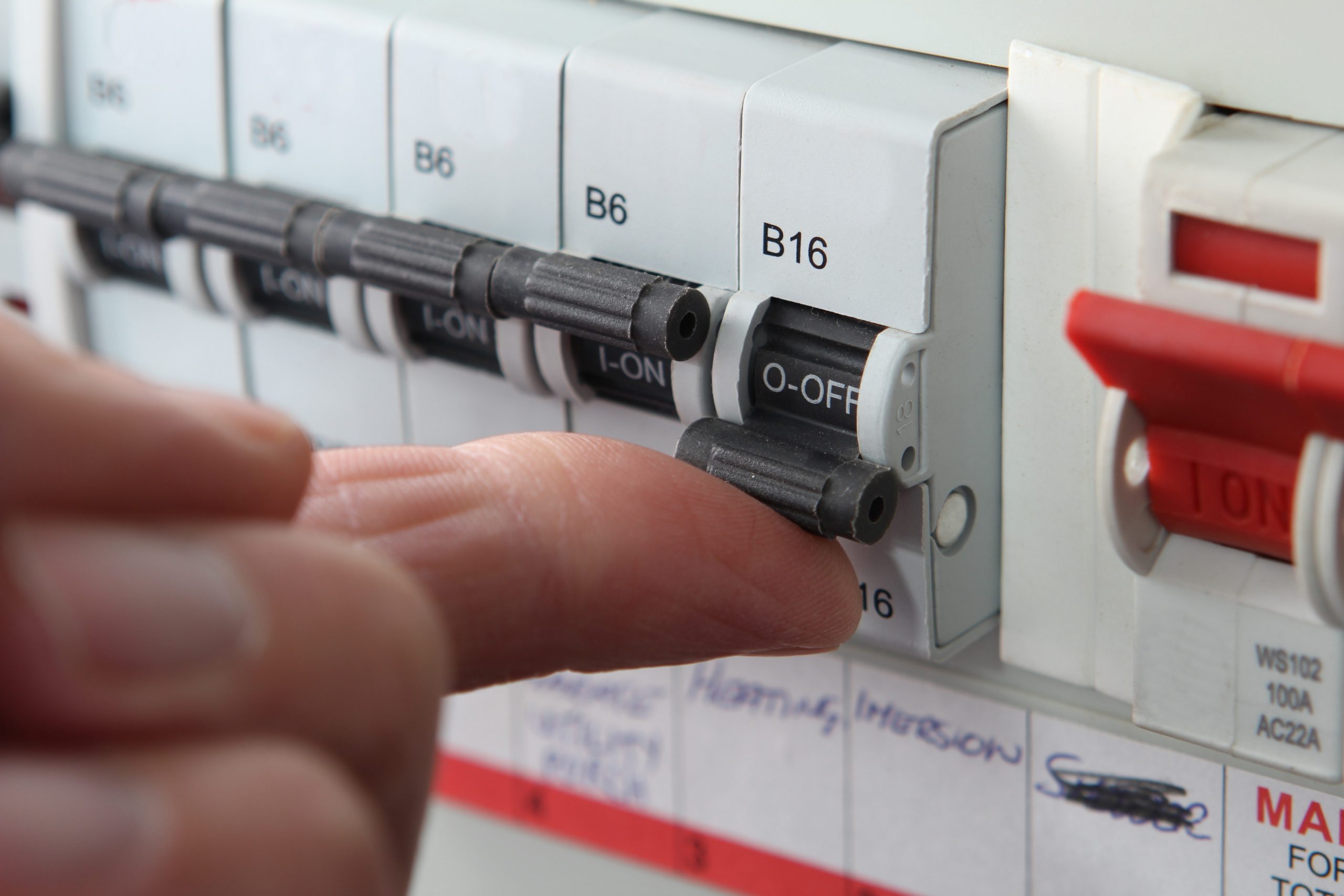
  • New electrical safety rules in England

    New electrical safety rules in England

    Five-year safety checks will be mandatory for landlords for all new tenancies from July 1 this year.

    This will be rolled out to all existing tenancies from April 2021.

    The new regulations were tabled today (MON), requiring pre-tenancy and five yearly checks of all fixed appliances and wiring.

    Landlords failing to comply with the new rules will face fines of up to £30,000.

    The RLA welcomes moves to make rental homes safer for tenants but does have some concerns of the timescale – with landlords having just five months to comply.

    Once the electrical installation has been tested, the landlord needs to receive a written report from the inspector, with the results and next inspection date. They must then

    • Give a copy of the report to tenants within 28 days
    • Give a copy to the local authority, if it asks for one, within seven days
    • Keep a copy and give it to the person carrying out the next inspection.

    For new tenancies, the landlord must:

    • Give the tenant a copy of the most recent report before they move in
    • Give a copy of the most recent report to any prospective new tenant who asks for it in writing, within 28 days

    What happens next?

    If improvement work is needed it must be carried out within 28 days, or a timeframe recommended by the inspector – which could be shorter.

    The landlord must then get written confirmation the work has been done, a copy of which needs to be given to each tenant – along with the original report.

    What happens if you don’t comply?

    If landlord breaches the requirements – and where the work is not urgent the council will serve a ‘remedial notice’ on the landlord.

    Once this is served the landlord will have 28 days to make the improvements or will be given 21 days to object.

    If the landlord doesn’t make the necessary improvements, the local authority can access the property with the tenants’ permission to do the work – although landlords can appeal.

    The local authority must tell the landlord – but will be able to recover their costs from them. They can also do this where urgent works are needed but have not been carried out.

    Access

    If the tenants of the property refuse access, the landlord will not be considered to have breached this duty.

    Written by Sally Walmsley

    Blog Post from Residential Landlords Association

    See details of our Guaranteed Rent Scheme here


  • London Courts Need Urgent Reform Warn Landlords

    London Courts Need Urgent Reform Warn Landlords

    Courts across London are failing to cope and need urgent reform warn landlords, with the volume of landlord repossession cases they are hearing.

    New figures published today show that the average length of time from a claim from a landlord in London to a court issuing an order for a property to be repossessed for legitimate reasons is 30 weeks.

    This is up from 23 weeks the year before.

    Landlords in London have the longest wait in the country followed in second place by those in the North East who have to wait an average of 23.5 weeks.

    The RLA is warning that without substantial reform and greater funding for the courts the time taken to process cases will only get worse as Ministers prepare to end Section 21, ‘no explanation’ repossessions. This will lead to much greater pressure on the courts to decide upon legitimate repossession cases such as in instances of tenant rent arrears or anti-social behaviour.

    Faced with such difficulties in regaining possession of their property, many good landlords will be put off providing the homes to rent the capital desperately needs, making life more difficult for tenants looking for somewhere to live.

    The RLA is calling on the Government to establish a dedicated housing court in order to improve and speed up access to justice for landlords and tenants in the minority of cases where something goes wrong.

    David Smith, Policy Director for the RLA, said:

    “If landlords feel that they might have to wait forever to regain possession of their property where they have good reason, such as tenants committing anti-social behavior or failing to pay their rent, increasing numbers are going to feel it is not worth the risk of letting the property out in the first place. This will just add to the already growing shortage of investment in rented housing which is badly needed to meet a rising demand.

    “The RLA was delighted when the Government consulted on its proposal for a housing court a year ago but nothing has happened since. It needs to get on and get it set up for the benefit of landlords and tenants alike.”

    Blog Post from Residential Landlords Association

    See details of our Guaranteed Rent Scheme here

  • Brexit and tax are key worries for buy to let investors in 2020

    Brexit and tax are key worries for buy to let investors in 2020

    A new survey suggests there may be an exodus of investors out of buy to let – some 27 per cent say they may no longer be a landlord in 2021.

    And in the survey – by insurance firm Just Landlords – some 31 per cent of landlords say they have more worries than they did 12 months ago, with 28 per cent claiming that owning a rental property is “very stressful”.

    The overriding feeling is that Brexit will adversely affect the market, says the company; 23 per cent of respondents believe it will become harder to find new tenants, while 25 per cent say rental properties will be harder to come by.

    Another significant change relates to the phasing out of deductible mortgage interest payments.

    Until 2017 mortgage interest payments were tax deductible but from April this year that will no longer be the case. Instead landlords will receive a tax credit calculated at 20 per cent of their mortgage interest, reducing their tax liability by the same percentage.

    All these factors contribute to 26 per cent of respondents saying that this year will be more expensive for landlords.

    Blog Post from Letting Agent Today

    See details of our Guaranteed Rent Scheme here

  • Airbnb landlords should pay business rates, says council

    A council is lobbying the government to ask for landlords using Airbnb and other short let platforms to be charged business rates.

    The move would be to level the playing field with buy to let long-term landlords and hoteliers, and may deter the proliferation of anti-social behaviour associated with tenants renting via Airbnb and similar services.

    The move comes from Brighton and Hove council, which says Airbnb has an unfair advantage compared with hotels and regular B&Bs.

    “Hotels and B&Bs must be licensed by councillors, but Airbnb houses don’t need licensing … Airbnb hosts make money the same way as hotels and other B&Bs. That’s why they should pay business rates … It’s very unfair competition” a local councillors is quoted as telling the Brighton Argus.

    “Put a flat on Airbnb is essentially taking it out of the market for local people … It’s like in Cornwall where you can go to towns where most of the houses are second homes.”

    The city council also believes introducing business rates for properties could be part of the solution to “party houses” – Airbnb homes which are rented by revellers to celebrate in.

    An Airbnb spokesman told the Argus that the platform “helps spread and diversify tourism in Brighton while extending benefits to local families and businesses”.

    Tighter controls over Airbnb and similar services are underway in Scotland where the devolved government has introduced measures allowing local councils to operate licensing systems on Airbnb hosts from 2021.

    At least one other English council is also seeking backing from the Westminster government for greater powers over short let regulation.

    Blog Post from Letting Agent Today

    See details of our Guaranteed Rent Scheme here

  • Cost Of Renting Takes 75 per cent Of Income

    Cost Of Renting Takes 75 per cent Of Income

    A lettings agency admits that the cost of renting has hit 75 per cent of income in some places.

    Benham and Reeves says the proportion has risen by 16.8 per cent in the last two decades to 45.5 per cent nationally.

    But it now accounts for 74.8 per cent of the average salary in London having jumped 33.7 per cent since the turn of the millennium.

    In the year 2000, the average rent accounted for 28.7 per cent of the average income in England.

    This was, of course, higher in London where 41.1 per cent of income was required to cover rent, with the South East (31.2 per cent) and South West (29.4 per cent) also amongst some of the highest of all regions.

    “There’s been plenty of positive changes to the rental market in the last 20 years with better codes of practice and improvements through technology allowing for a fairer, more transparent process for both landlords and tenants” explains the director of Benham and Reeves, Marc von Grundherr.

    “Unfortunately, the one thing this can’t address is the huge demand for rental properties and the resulting increase in the cost of renting as a result and with wage growth failing to keep pace, the proportion of our earnings required to cover rent has spiked notably since the turn of the millennium.”

    Blog Post from Letting Agent Today

    See details of our Guaranteed Rent Scheme here

  • Repossession Court Delays

    Repossession Court Delays

    London courts are failing to cope with the volume of landlord repossession court cases according to a trade body.

    New figures show the average length of time from a claim from a landlord in London to a court issuing an order for a property to be repossessed for legitimate reasons is 30 weeks.

    This is up from 23 weeks just a year earlier.

    Landlords in London have the longest wait in the country for repossession court cases, followed in second place by those in the North East who have to wait an average of 23.5 weeks.

    The Residential Landlords Association is warning that without substantial reform and greater funding for the courts the time taken to process cases will only get worse as ministers prepare to end Section 21, ‘no explanation’ repossessions.

    The RLA insists this will lead to much greater pressure on the courts to decide upon legitimate repossession cases such as in instances of tenant rent arrears or anti-social behaviour.

    The RLA is calling on the government to establish a dedicated housing court in order to improve and speed up access to justice for landlords and tenants in the minority of cases where something goes wrong.

    RLA policy manager John Stewart says: “If landlords feel that they might have to wait forever to regain possession of their property where they have good reason, such as tenants committing anti-social behaviour or failing to pay their rent, increasing numbers are going to feel it is not worth the risk of letting the property out in the first place.

    “This will just add to the already growing shortage of investment in rented housing which is badly needed to meet a rising demand.

    “The RLA was delighted when the government consulted on its proposal for a housing court a year ago but nothing has happened since. It needs to get on and get it set up for the benefit of landlords and tenants alike.”

    Blog Post from Letting Agent Today

    See details of our Guaranteed Rent Scheme here

  • Another New Rental Law

    Another New Rental Law

    Another new Rental Law looks almost certain that agents and landlords must ensure electrical installation inspections and testing are carried out for all new tenancies in England from July 1 this year, or from April 1 2021 for existing tenancies.

    The government says The Electrical Safety Standards in the Private Rented Sector (England) Regulations 2020 have been laid before Parliament.

    These are likely to be agreed by the Commons and the Lords in the coming weeks.

    An analysis by ARLA says this means agents and landlords must ensure every fixed electrical installation is inspected and tested at least every five years by a qualified person.

    The regulations also state that a landlord is required to obtain a report of the results of the inspection and test, supply it to each tenant within 28 days and retain a copy until the next inspection is due.

    ARLA says that upon request, the report must be provided to the local housing authority within seven days, and a private landlord must supply a copy of the last report to any new tenant before occupation, or any prospective tenant within 28 days of a request from that prospective tenant.

    Breaches of the regulations can result in the local housing authority imposing a financial penalty of up to £30,000.

    The Association of Residential Lettings Agents backs the move with chief executive David Cox saying: “We are supportive of this concept and believe it will create a level playing field for all agents and landlords as well as ensuring improved safety standards for tenants.

    “Mandating  electrical testing should have a limited impact on good professional landlords and agents in the market, many of whom already voluntarily undertake these inspections.

    “We did raise concerns about the number of engineers available to undertake these reports by the April 2021 deadline but have received assurances from the Ministry of Housing, Communities and Local Government about capacity in the supply chain.”

    Blog Post from Letting Agent Today

    See details of our Guaranteed Rent Scheme here

  • Shelter’s latest attack on private rental sector rejected by industry

    Shelter’s latest attack on private rental sector rejected by industry

    There’s been an angry response by the rental sector following the latest attack by campaigning charity Shelter.

    The organisation claims that private tenants have fallen ill because of housing-related worries.

    But the Residential Landlords Association (RLA) insists this is not, as some may think Shelter suggests, be a problem restricted to the private sector.

    The RLA instead dismisses what it calls the false impression that landlords spend all their time looking for ways to evict their tenants or increase their rents.

    The RLA points to official statistics which show that:

    – 84 percent of private sector tenants are very or fairly satisfied with their current accommodation, a higher proportion than tenants in the social rented sector;

    – Private sector tenants live in the same rental properties for an average of 4.1 years;

    – The proportion of private rented housing with at least one of the most dangerous ‘Category 1’ hazards has halved over the last ten years to 14 percent;

    – The amount that tenants in private rented housing are paying in rent as a proportion of their income is falling, whilst in the social rented sector it is increasing;

    – Almost 90 percent of tenancies brought to an end are done so by the tenant, not the landlord.

    RLA policy director David Smith says: “We accept that, unfortunately, some private sector tenants will feel unhappy and stressed as a result of their housing but the same will apply to many social housing tenants and owner-occupiers.

    “We accept also that not all landlords are perfect but the objective assessment is that the overwhelming majority of private sector tenants are satisfied with their accommodation and enjoy a good relationship with their landlord.

    “It is vital that tenant groups properly reflect this, rather than stoking fears that tenants are about to be evicted for no apparent reason, live in sub-standard accommodation and are charged exorbitant rents. This is simply not true and it is irresponsible to suggest so.

    “We do all we can to support landlords to provide high standard, secure and affordable tenancies and we call on tenant organisations to work with us to help achieve this and root out the bad landlords that none of us wishes to see in the market.”

    Blog Post from Letting Agent Today

    See details of our Guaranteed Rent Scheme here

  • Many tenants unable to afford rent despite allowance reform

    Many tenants unable to afford rent despite allowance reform

    Plans to end the freeze on housing benefits will still leave many tenants unable to afford rent say landlords.

    Following the announcement that from April the Local Housing Allowance will increase by inflation as measured by the Consumer Price Index, the Residential Landlords Association says that as the allowance has been frozen since 2016, a rise of around 1.5 per cent – the inflation level – is actually leaving tenants considerably out of pocket.

    The LHA was introduced in 2008 and is used to calculate housing benefit for those in private rented accommodation.

    Prior to 2016 the LHA was based on enabling a tenant to afford a rent in their area.

    Given how rents have moved in different areas with some having steeper increases than others, instead of a flat rate increase, the RLA is calling for the LHA to again be based on this area approach.

    John Stewart, policy manager for the RLA, says: “The benefit level needs to reflect the realities of the level of rents locally. Given rents have risen by an average of five per cent, and in some areas more than that over the last four years, a rise of 1.5 per cent in the benefit level is not going to be much help to a tenant struggling to afford the rent in those areas and many others.

    “If it really wants to help tenants, the government should restore the direct link between rent levels and the LHA instead of a paltry flat rate increase.”

    Blog Post from Letting Agent Today

    See details of our Guaranteed Rent Scheme here

  • Buy To Let league table reveals where demand is strongest

    Buy To Let league table reveals where demand is strongest

    A rental management platform has compiled a league table of where tenant demand is strongest for homes to let – and the results are not as many would have predicted.

    The platform Howsy looked at rental listings across the major portals and cross-analysed demand in 23 major UK cities as well as each borough of London, based on the proportion of rental listings snapped up by renters as a percentage of all listings available online.

    By doing so, it claims to have identified where the hottest pockets of the rental market exist.

    Newport is home to the highest level of tenant demand with 35 per cent of all rental homes listed on the major portals already let.

    Bristol remains one of the most in-demand cities for rental properties at 34 per cent with Nottingham and Cambridge (both 33 per cent) and Belfast (25 per cent) making up the top five.

    Plymouth, Portsmouth, Bournemouth, Leicester and Manchester complete the top 10.

    Aberdeen remains the least sought after area for rental properties in the UK with tenant demand at only five per cent followed by Swansea on eight per cent.

    Within the capital, Bexley, Bromley, Sutton and Lewisham are the hottest boroughs for tenants with 38 per cent of all rental stock listed online already being snapped up.

    Merton, Croydon, Greenwich, Haringey, Enfield and Kingston upon Thames are also amongst the most popular.

    “The buy to let sector may have had a rough ride of late but the UK rental market is still heavily relied upon by many in order to put a roof over their head and as a result, many cities still provide a great opportunity for investors due to the lower levels of available stock and consistently high tenant demand” explains Howsy chief execute ve Calum Brannan.

    Blog Post from Letting Agent Today

    See details of our Guaranteed Rent Scheme here